
A worn-out classroom desk tells a story. It bears the weight of a hundred lessons, the scratches of a thousand pen drops, and the constant shifting of restless students. When a school principal or procurement head looks at that battered piece of furniture, one question comes to mind: how do we stop this from happening again? The answer starts with the raw materials. Selecting the right school desk materials dictates whether a classroom remains functional for five years or survives for decades.
The best materials for school desks and benches are solid wood, marine-grade plywood, and powder-coated steel. Wooden school desk materials offer classic durability and a warm aesthetic, while metal frames provide essential structural strength. Selecting the right mix of these durable materials for school furniture ensures long-lasting, safe, and comfortable classroom environments. Understanding the specific types of materials used in school desks helps administrators make informed purchasing decisions that protect their institutional budgets.
What are the best materials for school desks and benches?
Solid hardwood, marine-grade plywood, and powder-coated steel form the foundation of the best material for classroom desks and benches. Hardwoods like oak and maple resist daily wear, while powder-coated steel frames provide the load-bearing capacity needed for active students. This combination balances structural integrity with long-term comfort, ensuring the furniture withstands heavy daily use without compromising safety.
Why selecting the right school desk materials matters for student posture
A desk is not just a flat surface. It is a physical anchor for a child’s posture throughout the day. If the wood warps or the steel frame bends, the ergonomic alignment fails. According to the 2024 comprehensive guide by RFM Group, adjustable height desks are crucial because they allow the furniture to adapt to pupils of different ages and sizes, ensuring ergonomic comfort. When manufacturers use high-density, rigid materials, the desk maintains its structural shape over years of use. This stability prevents the slight wobbles and uneven surfaces that cause students to slouch, lean, or develop back strain during long study periods.
How durable materials for school furniture reduce long-term replacement costs
Budgets dictate reality in school administration. A cheaper desk made from low-grade particleboard might save a school money in year one, but it will cost triple over a decade. High-quality school desk materials resist the exact types of damage that destroy cheaper units. They do not chip at the edges. They do not rust when exposed to humidity. They do not snap under the weight of a student leaning heavily on the back legs. By investing in dense, resilient materials upfront, schools break the cycle of annual repairs and bulk replacements, lowering their total cost of ownership significantly over a five to ten-year period.
What are the different types of materials used in school desks?
The types of materials used in school desks generally fall into three categories: solid woods and plywood, steel alloys, and high-density plastics. Manufacturers often combine these elements, using steel for the frame, plywood or MDF for the top, and injection-molded plastic for the seating. Each material serves a distinct structural purpose in the classroom.
Hardwood and plywood options for traditional classrooms
Wood remains a timeless choice for school furniture. According to Fujian Jiansheng Furniture Group, hardwoods such as oak, maple, and beech are commonly used due to their strength and resistance to wear and tear. Wood desks add a touch of natural warmth to a classroom and provide a dense, sturdy surface for writing.
However, very few student desks today are made entirely of solid wood. As custom furniture designer Michael Lemay explained on Quora, modern student desks are typically made from a molded wood flour mixed with glue powder, which is placed in a metal mold and then put in a heated press where the finished shape is formed. This process creates a hard, shiny surface that resists marring from daily use. It is far less expensive to manufacture these parts from this material, and it will last longer than a desk made from solid wood. For the structural tops and benches, marine-grade plywood offers superior moisture resistance compared to standard MDF, preventing the delamination that occurs when cheaper woods absorb spilled liquids.
Steel and metal frames for heavy-duty structural support
Metal provides the backbone of modern institutional furniture. Steel school desks, typically made from steel or aluminum, are valued for their strength, stability, and modern aesthetic. They are often used in high-traffic areas such as laboratories and computer rooms due to their resilience and ease of cleaning.
The critical factor here is the finish. Bare steel rusts. To prevent this, manufacturers apply powder coatings or electroplating. This anti-corrosion layer ensures the metal frames survive humid monsoon seasons and the occasional spill of cleaning chemicals. A heavy-duty steel frame bears the dynamic load of a student shifting their weight without bending at the joints. This makes metal the undisputed choice for the undercarriage of dual desks and heavy benches.
High-density plastics for lightweight, modern designs
Plastic has gained popularity for its affordability, lightweight construction, and vibrant color options. Chairs and desks made from high-quality plastic materials such as polypropylene are durable, easy to clean, and suitable for both indoor and outdoor use. Plastic is particularly well-suited for early childhood education settings and multipurpose areas.
Unlike wood, injection-molded plastic allows for complex, ergonomic curves in the seat shell at a fraction of the manufacturing cost. It provides a wide range of color options, which helps preschools create visually engaging environments. While plastic alone cannot support the heavy structural requirements of a senior classroom desk, it excels as a seating material paired with a rigid steel frame.
Wooden vs metal school desks: Which is better for your institution?
The choice between wooden vs metal school desks depends entirely on the age of the students and the specific room application. Wood offers superior acoustic dampening and a classic aesthetic, making it ideal for libraries and quiet study areas. Metal provides unmatched structural strength and is easier to sanitize, making it the standard for science labs, computer rooms, and heavy-use senior classrooms.
Comparing the lifespan and maintenance of wood and metal
Wood requires more attentive maintenance. It needs occasional polishing and can suffer from deep scratches or water damage if the protective finish wears off. Metal, on the other hand, requires almost zero maintenance beyond wiping it down with standard cleaning supplies. According to the Jiansheng Furniture Group, metal furniture is resistant to corrosion and damage, offering a modern and industrial design aesthetic.
However, metal can dent. A sharp impact can create a permanent depression in a steel tube, potentially creating a sharp edge or weakening the frame's geometry. Wood absorbs impacts better but pays for it in surface scratches. For a standard classroom, a hybrid approach solves this problem.
When to choose hybrid wooden and metal school desks
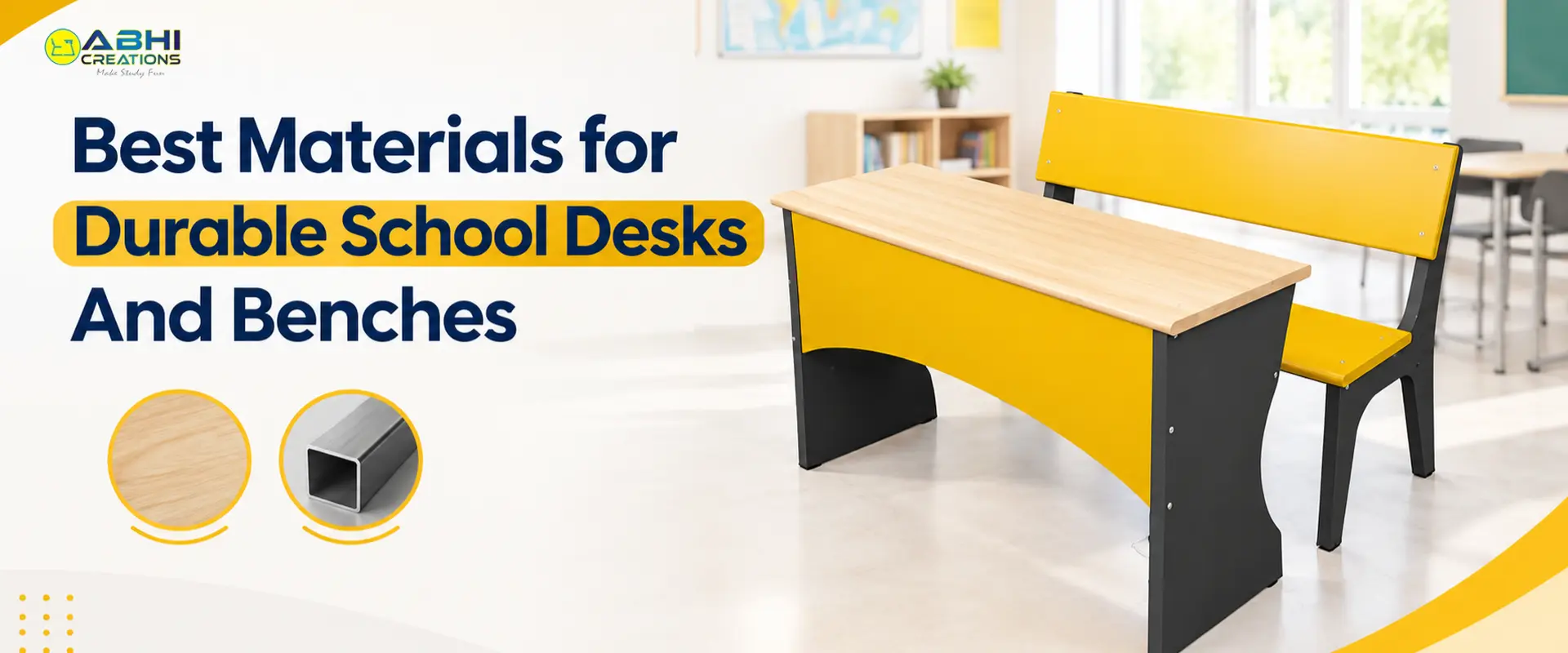
We recommend hybrid school desk materials for the vast majority of institutions. A hybrid desk uses a powder-coated steel frame for structural support and a marine-grade plywood or MDF top for the writing surface. This combination gives you the best of both worlds. The steel frame ensures the desk will not wobble or collapse under heavy load. The wooden top provides a warm, quiet, and rigid writing surface that does not feel cold to the touch in winter. This is the best material for classroom desks and benches because it isolates the weaknesses of each material and offsets them with the strengths of the other.
How do you identify the best material for classroom desks and benches?
To identify the best materials, administrators must evaluate safety standards, ergonomic design, and the specific wear and tear the furniture will face daily. A material is only as good as its ability to survive the specific environment of the classroom. You have to look past the marketing and examine the physical construction of the desk.
Key factors: safety standards, ergonomics, and daily wear and tear
Safety comes first. Desks must feature rounded edges to prevent injury, a point emphasized in the 2024 RFM Group guide regarding primary school furniture. The materials must not splinter, crack, or shed toxic chemicals over time. Ergonomics matter just as much. The material must be rigid enough to maintain flat writing surfaces but designed in a way that accommodates natural body movement. Daily wear and tear tests how the material handles friction, dropped textbooks, and constant cleaning. Hard plastics and laminates resist stains. Steel resists bending. Hardwoods resist impact. Matching these material properties to your school's daily reality is the key to long-term value.
Why anti-rust coatings and edge banding matter for durability
The failure points of a desk are almost always its joints and edges. This is where material selection meets manufacturing execution. A steel frame without a proper anti-rust coating will eventually degrade, especially in coastal or humid regions. Edge banding is equally critical. The exposed edges of an MDF or plywood top are highly vulnerable to moisture. If the edge banding—a thin strip of PVC or acrylic applied to the perimeter—fails, the core material will absorb water, swell, and delaminate. When evaluating durable materials for school furniture, inspect the edge banding and the powder coating. These secondary features dictate the actual lifespan of the unit.
What should schools look for when sourcing durable materials for school furniture?
Schools must look for material transparency, structural warranties, and a manufacturer's willingness to provide custom solutions. Sourcing is not just about buying a product; it is about partnering with a manufacturer who understands the physical demands of an educational environment. You need to verify that the materials quoted on the invoice are the materials actually used in the factory.
The importance of choosing a trusted school furniture manufacturer
A trusted manufacturer provides material certifications, adheres to safety standards, and has a proven track record. They do not substitute marine-grade plywood with cheap particleboard to save on costs. Working with an established manufacturer ensures that the raw materials—be it the gauge of the steel tubing or the density of the plastic shells—meet institutional-grade specifications rather than retail-grade compromises. This is why schools across India rely on a trusted school furniture manufacturer to supply products that withstand the rigors of daily student use.
How custom solutions meet specific classroom needs
Off-the-shelf desks rarely fit every classroom perfectly. A science lab needs chemical-resistant laminate tops. A preschool needs lightweight, colorful plastic furniture with rounded edges. A college lecture hall needs fixed, heavy-duty benches. Custom solutions allow schools to specify the exact mix of materials required for their unique spaces. Whether you need a specific desk height for a particular age group or a specialized storage compartment built into the frame, custom manufacturing ensures the materials match the pedagogical intent of the room.
How does Abhi Creations ensure quality in school desk materials?
Abhi Creations ensures quality by controlling the entire manufacturing process from raw material selection to final assembly at our own factory in Mundka, Delhi. With 25 years of direct experience, we test every batch of steel, plywood, and plastic against strict institutional standards. We do not guess what works; we engineer it.
Our 25 years of manufacturing experience in Mundka, Delhi
Two and a half decades of production teaches you exactly how a desk fails. We have spent 25 years refining our material choices based on real-world feedback from schools across India. Our factory floor in Mundka allows us to inspect the raw materials at every stage of production. We understand how the local climate affects different woods and metals, and we select our school desk materials accordingly. This deep operational expertise, built over our 25-year history as Abhi Creations, forms the backbone of our quality assurance process.
Commitment to safety, strength, and long-lasting classroom furniture
Our commitment goes beyond just building strong desks. We build safe ones. Every piece of furniture we manufacture prioritizes student safety through rounded edges, non-toxic finishes, and rigid stability. We use high-grade steel for frames and dense, impact-resistant tops for writing surfaces. We stand behind the durability of our products because we control the manufacturing process from start to finish. If you need reliable, long-lasting classroom furniture, reach out to our team to discuss your school's specific requirements. You can also see our latest installations and material finishes by following our updates on Facebook and Instagram.
Conclusion: Choosing the right school desk materials for long-term value
Choosing the right school desk materials is an investment in your institution's future. Solid wood, marine-grade plywood, powder-coated steel, and high-density plastics each play a vital role in creating safe and productive learning environments. By understanding the strengths and weaknesses of wooden vs metal school desks, administrators can specify furniture that outlasts the students who sit at them. Prioritize structural integrity, demand proper edge banding and anti-rust coatings, and partner with a manufacturer who understands the daily abuse classroom furniture endures. The right materials reduce long-term costs, support proper student posture, and keep the focus where it belongs: on the lesson.
Reviewed by the Abhi Creations content team
Key Takeaways
Hybrid desks combining powder-coated steel frames and marine-grade plywood tops offer the best overall durability.
Metal frames provide essential structural strength, while wooden tops deliver a quiet, impact-resistant writing surface.
Secondary features like anti-rust coatings and secure edge banding dictate the actual lifespan of classroom furniture.
Investing in high-quality materials reduces long-term replacement costs and improves student ergonomic comfort.
Comparison
| Material Type | Key Benefits | Drawbacks | Best Classroom Application |
|---|---|---|---|
| Solid Hardwood & Plywood | Impact resistant, warm aesthetic, quiet surface | Requires maintenance, vulnerable to moisture without sealing | Libraries, traditional classrooms, quiet study areas |
| Powder-Coated Steel | Heavy-duty support, corrosion resistant, easy to sanitize | Can dent from sharp impacts, feels cold without a wooden top | Science labs, computer rooms, heavy-use senior classrooms |
| High-Density Plastic | Lightweight, affordable, vibrant colors, easy to clean | Lacks structural strength for heavy desktop loads | Preschools, multipurpose areas, seating shells |
| Hybrid Wood and Metal | Combines structural steel strength with a warm wooden top | Slightly higher upfront cost than single-material desks | General classrooms, lecture halls, institutional use |
Frequently Asked Questions
What are school tables made of?
School tables are typically made from a combination of solid woods, marine-grade plywood, powder-coated steel, and high-density plastics. Manufacturers often use steel for the structural frame and plywood or plastic for the top, balancing durability with everyday classroom functionality.
What is the best material for classroom desks and benches?
The best material for classroom desks and benches is a hybrid combination of powder-coated steel and marine-grade plywood. This mix provides heavy-duty structural support from the metal frame, while the wooden top offers a warm, sturdy, and quiet writing surface for students.
How do wooden vs metal school desks compare in durability?
Wooden desks absorb impacts well and offer a classic aesthetic but require more maintenance to prevent scratches. Metal desks resist corrosion and are easier to sanitize, though they can dent under sharp impacts. Hybrid desks combine both materials to maximize overall lifespan.
What types of materials used in school desks last the longest?
Hardwoods, marine-grade plywood, and powder-coated steel last the longest in school desks. These materials resist daily wear, moisture, and structural stress. High-density plastics also provide excellent longevity for seating and early childhood classroom environments.
How do I choose durable materials for school furniture?
To choose durable materials for school furniture, prioritize safety standards, ergonomic design, and resistance to daily wear. Look for anti-rust coatings on metal frames and high-quality edge banding on wooden tops to prevent moisture damage and ensure long-term structural integrity.
← Back to Blogs